
 Svenska
 Deutsch




Cart
Your cart is empty, but doesn't have to be..
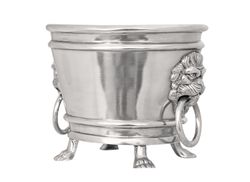
This beautiful piece has the impressive dimensions; length 25 cm, width 17.5 cm and a height of 17.5 cm and weighs a whopping 1.2 kilos. Läckö is also available in a smaller size.
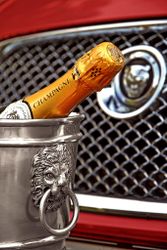
Läckö, outdoor pot/wine cooler in pewter (large model) takes us back to Sweden's heyday in the 17th century with our dominance around the Baltic Sea. The design ideal of the heyday was the lion which was, at that time, very exotic and radiated, "manhood, courage and brave men". In this pot that can have many uses, we have taken the lion from the 17th century and with feet to the pot in the form of paws. Use it for wine and champagne on the dinner table and then as a flower pot in everyday life.
Champagne cooler or flower pot is named after Läckö castle which is located on an island in Lake Vänern. The castle has its origins in the Middle Ages, but in the 17th century Count Magnus Gabriel De la Gardie transformed Läckö into a Baroque castle and added several structures, including the main building, wings, towers and a chapel. Here we have been inspired by the Baroque with its lion mascarons and lion busts.
In the 17th century, the lion had several meanings and symbolic functions in different cultural and political contexts. Here are some of the most important meanings:
Royalty and symbol of power
The lion has long been a symbol of royalty and power. In the 17th century, the lion was often used in coats of arms and heraldic emblems to represent kings and nobles. The lion symbolized strength, courage, and supremacy, making it a suitable symbol for the ruling classes and the monarchy.
Protection and justice
The lion was also considered a protector and justice. In many European countries, including Sweden, the lion was used as a symbol of justice and protection of the kingdom. For example, the lion was used in the Swedish national coat of arms, where it still remains as an important part of the country's heraldic symbolism.
Religious symbolism
The lion also had religious connotations, often associated with qualities such as righteousness and divine protection. In Christian iconography, the lion could represent Christ as the "Lion of Judah", a symbol of his strength and kingship.
War and bravery
During times of war, the lion represented bravery and military strength. Soldiers and military personnel could use the lion as an emblem to show their courage and fighting spirit. This was especially common during the Thirty Years' War (1618-1648), when symbolism played an important role in boosting morale and identifying different factions.
Examples from Historical Documents
- Swedish national coat of arms: Sweden's national coat of arms from the 17th century included three crowns and a lion, symbolizing the king's power and the unity of the kingdom.
- English monarchy: The lion was a central symbol in the coat of arms of the English monarchy, representing royal power and strength.
Through these uses, the lion became a multifaceted symbol that embodied several important ideals and qualities during the 17th century.
Your cart is empty, but doesn't have to be..