
 Svenska
 Deutsch





Cart
Your cart is empty, but doesn't have to be..
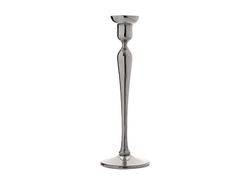
Skokloster, a pewter candlestick, from Munka Tenn with a height of 17 cm and a diameter of the base plate of 12 cm and a weight of 560 grams, is dear to our hearts as we live in Enköping on the shores of Lake Mälaren.
Skokloster Castle, located on the shores of Lake Mälaren and close to Bålsta, is one of Sweden's most impressive Baroque castles and an important part of Swedish cultural heritage. The castle began construction in 1654 by Carl Gustaf Wrangel, a prominent military man and one of the most influential figures of the Swedish Great Power era. Wrangel's ambition was to create a castle that would not only be his family's home but also a monument to his own successes and Sweden's power.
The construction of the castle was characterized by Baroque aesthetics with grand halls, richly decorated interiors and an extensive collection of art and antiques. After Wrangel's death in 1676, work on the castle continued for a time, but it was never fully completed according to the original plans. Despite this, Skokloster stands as a symbol of the era when Sweden was a European power.
After Wrangel's time, the castle changed hands several times and was owned by the Brahe family until 1967, when it was donated to the state. Today, Skokloster is part of the Swedish Property Board and serves as a museum open to the public. The museum offers a unique insight into life in the 17th century and an extensive collection of weapons, art, books and textiles from the time.
The castle's architecture and extensive collections bear witness to a time when Sweden was at the height of its military and cultural power. Today, Skokloster is not only a popular tourist destination but also an important place for research and education about Swedish and European history. It continues to be a place where visitors can experience and learn about the rich history and culture of a bygone era.
Skokloster is also perhaps the most well-preserved interior environment from Sweden's Great Power period.
Your cart is empty, but doesn't have to be..