
 Svenska
 Deutsch
Cart
Your cart is empty, but doesn't have to be..

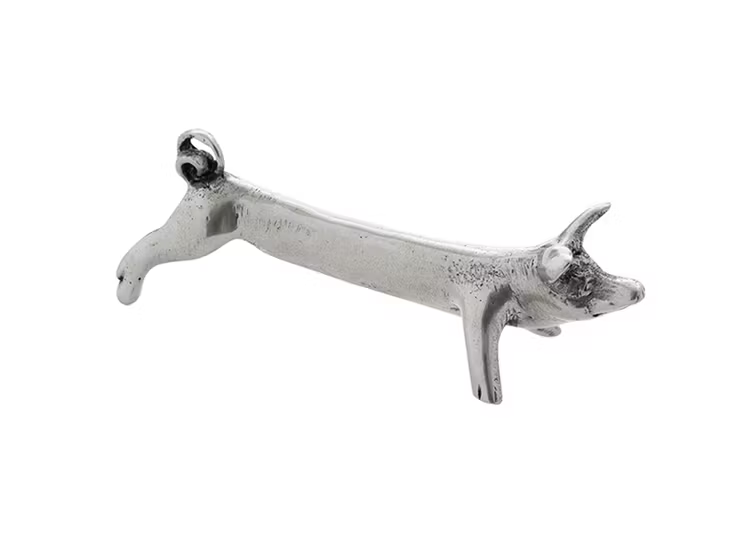
Nice knife blade in the shape of a slightly tapered pig made of lead-free pewter from Munka Tenn. Piglet has a length of 8 cm. Weight just under 30 grams.
The term "knife spread" is directly linked to the use of butter knives, which have a long history. To understand when knife spreads began to be used, we need to look at the history of butter knives and their development.
Antiquity and the Middle Ages
Knives have been used since prehistoric times, but specific butter knives only began to appear in antiquity and the Middle Ages. The Romans and later European cultures used simpler tools for spreading butter and other spreads. It is likely that the term "knife spread" was not formally used at this time, but the act of spreading with a knife was already established.
During the 18th and 19th centuries, butter knives began to become more specific and widespread in Europe, including Sweden. These knives were designed to spread butter and other soft spreads without damaging the bread. At this time, more specific terms and expressions related to kitchen utensils and their uses also began to appear.
During the 20th century, the term "knivbrett", as we understand it today, became more common. as the sandwich culture in Sweden became even more established and specialized kitchen utensils became more common in households. Butter knives became standard in Swedish kitchens, and the term "knivbrett" came to be associated with the specific movement of spreading butter or spreads with a butter knife.
Your cart is empty, but doesn't have to be..