
 Svenska
 Deutsch




Cart
Your cart is empty, but doesn't have to be..

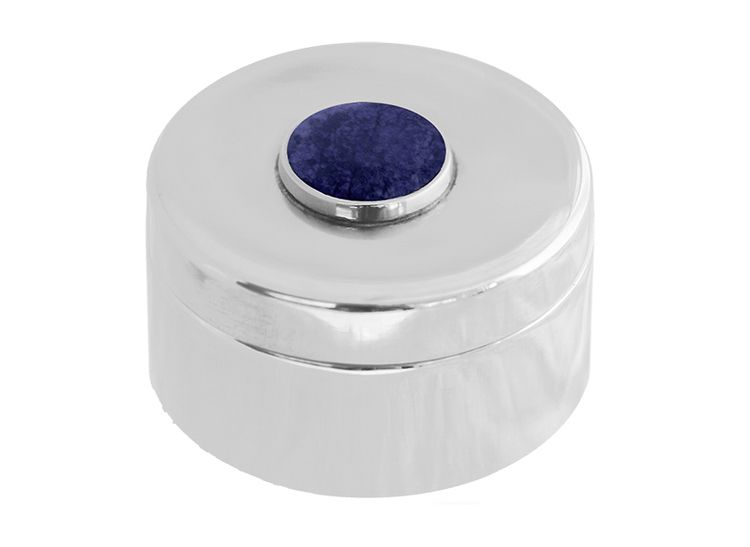
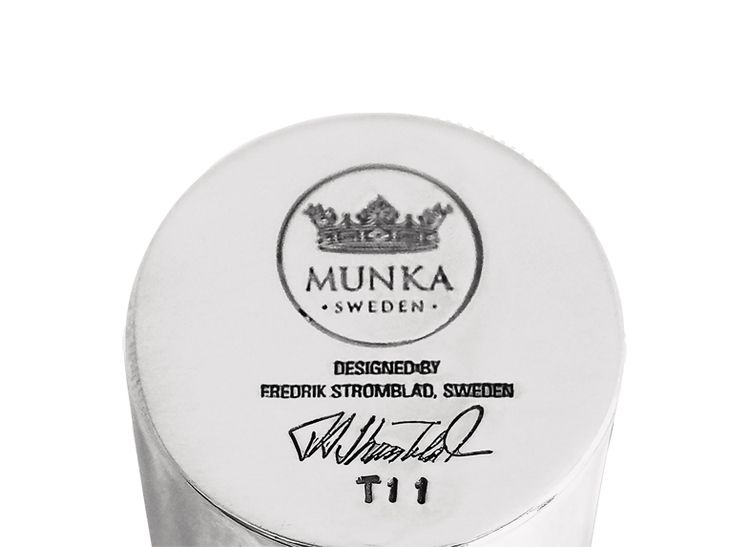
This small box in lead-free pewter with a lapis lazuli stone on the lid is designed by Fredrik Strömblad, for Munka Tenn. The box measures 3 cm in height and has a diameter of 7 cm. Each stone is individually included by hand in the lid. Each box bears the designer's signature and year stamp. The box weighs 105 grams.
We have heard from our female customers that it is very appreciated as it is excellent for storing earrings, gold chains, etc. The box is available in both malachite and lapis lazuli.
A truly nice gift for someone you love and if you are in need of a gift, it will help you come up with a unique gift.
Why not also add a story about lapis lazuli and its history.
Lapis lazuli is a deep blue gemstone that has a rich history and has been highly valued in many cultures over the millennia. The stone is known for its intense blue color, which can range from medium blue to royal blue, often with natural inclusions of white calcite flecks and golden pyrite flecks that give it a shimmering effect.
Origin and occurrence
Lapis lazuli is composed primarily of the mineral lazurite, but also contains calcite, pyrite, and other minerals. The best-known source of high-quality lapis lazuli is the Badakhshan province of northeastern Afghanistan, where it has been mined for over 6,000 years. Other significant deposits are found in Chile and Russia.
Historical use
Lapis lazuli has been used since ancient times for its beauty and as a pigment. In ancient Egypt, the stone was considered symbolic of the sky due to its color, and was used to make jewelry and decorative objects. It was also popular in the funerary equipment of pharaohs, including famous items in the tomb of Tutankhamun, where it was used in his famous death mask, among other things.
Lapis lazuli was also highly valued in Mesopotamia, Persia, Greece and Rome. In Renaissance Europe, the stone was ground into a fine powder to create ultramarine, the most expensive of all blue pigments. It was used by some of the most prominent artists, including Michelangelo and Vermeer, to create an intense, sky-blue color in their paintings.
Cultural and metaphysical significance
In addition to its aesthetic and practical value, lapis lazuli has often been associated with strength and courage, and is believed to have healing properties. In various cultures, the stone has been seen as a symbol of royal power and wisdom. It has also been used in meditation and spiritual contexts to increase mental clarity and promote self-awareness.
Contemporary use
Today, lapis lazuli is still used in jewelry making and as an ornamental stone. Its rich history and significance as a cultural artifact continue to fascinate and inspire people all over the world.
Your cart is empty, but doesn't have to be..