
 Svenska
 Deutsch

Cart
Your cart is empty, but doesn't have to be..
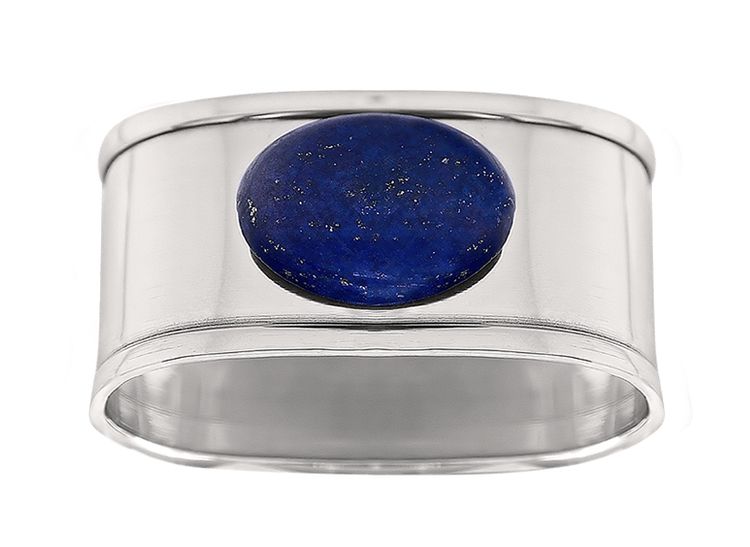
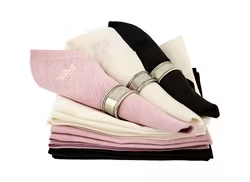
The napkin ring with included Lapis lazuli stone is 6 cm wide, 3 cm high and weighs approximately 50 grams.
It takes many skilled craftsmen to produce this napkin ring. First, the tin is mined and refined into raw tin in mines in Asia and South America. Historically, a significant amount of tin was mined in England from Roman times onwards, particularly in the well-known mines in Cornwall and Devon. Our napkin rings are cast, polished and set with stones by hand by skilled craftsmen in Europe.
Lapis lazuli has been a sought-after gemstone in many cultures due to its intense blue color and associations with power, wealth, and celestial qualities. Although the stone can be quarried in several locations today, Sar-e-Sang in Afghanistan is still the most famous and is considered to produce the highest quality.
Once the stone is quarried and has left the mines, it is cut to the correct size. This process, which includes cutting, grinding and polishing, is carried out for our stones in India.
The napkin ring was designed by Fredrik Strömblad and is marked with the Munka trademark.
Your cart is empty, but doesn't have to be..