
 Svenska
 Deutsch


Cart
Your cart is empty, but doesn't have to be..

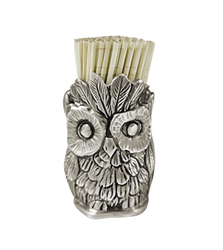
This little toothpick holder is as stylish as it is practical. Works just as well for everyday use as it does for parties. The height is 4.3 cm and the diameter is 3 cm. The weight of this little piece is a whopping 80 grams.
The laurel wreath has a rich and symbolic history that dates back to ancient Greece and Rome. Originally, the laurel wreath was made from the leaves of the laurel tree (Laurus nobilis) and was used to crown victors and prominent figures.
Ancient Greece
In ancient Greece, the laurel wreath was primarily associated with Apollo, the god of the sun and poetry. It was used as a symbol of honor and triumph. Winners of the ancient Olympic Games and other athletic competitions were often awarded a laurel wreath as a sign of their victory and success.
Roman Empire
In the Roman Empire, the tradition of wearing laurel wreaths continued, but it also took on political and military significance. Roman generals returning from successful campaigns received laurel wreaths as symbols of their military victories. The Roman emperor also sometimes wore a laurel wreath to mark his divine status and power.
Symbolism
The laurel wreath symbolizes victory, wisdom, and eternal glory. It has also been used as a sign of peace and protection. In modern times, we often see the laurel wreath in symbols and emblems of organizations, sporting events, and academic institutions to represent achievement and honor.
Over the centuries, the laurel wreath has retained its significance as a symbol of triumph and success, and it is still used today in various ceremonies and contexts around the world.
The toothpick is a tool that has been around for thousands of years and has been used by various cultures around the world. The earliest evidence of toothpicks dates back to prehistoric times when people used sharp objects such as bone or wood to clean their teeth.
In ancient times, especially in the Roman Empire, toothpicks were part of daily hygiene routines. The Romans often used toothpicks made of wood or metal. There were even gilded toothpicks for the rich and powerful.
The Middle Ages saw continued use of toothpicks, but it was not until the Renaissance that the toothpick became a more refined tool. Noblemen and women began using toothpicks made of precious metals such as silver and gold, often adorned with jewels.
In the 17th and 18th centuries, toothpicks became a symbol of status and elegance. The finest toothpicks were artistically designed and proudly displayed at dinners and social events. Toothpicks also became more practical with foldable and portable versions that could be easily carried around.
In the 19th century, with the rise of industrialism, the mass production of toothpicks began, especially in the United States. Charles Forster, an American entrepreneur, is known for industrializing the production of wooden toothpicks. His factory in Maine produced millions of toothpicks each year.
In modern times, the toothpick has retained its simplicity and usefulness, but has also evolved into various shapes and materials, including plastic and bamboo. Despite its small size, the toothpick has a long and fascinating history that reflects man's pursuit of hygiene and elegance throughout the centuries.
Your cart is empty, but doesn't have to be..