
 Svenska
 Deutsch




Cart
Your cart is empty, but doesn't have to be..
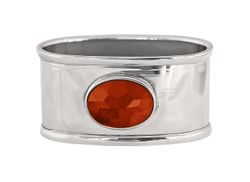
Napkin ring with mother of pearl, with dimensions 6 cm in width, 3 cm in height and 3 cm in depth designed by Fredrik Strömblad and stamped with the Munka Tenn logo.
The name in English is "Mother of Pearl" and in Swedish "pärlemor" – a description that well sums up its origin and nature. Mother of pearl, also known as nacre, is a natural substance that forms inside the shells of certain mollusks, such as oysters, mussels and conchs. The name "mother of pearl" comes from the German "Perlmutter," where "Perl" means "pearl" and "Mutter" means "mother". This name was chosen because mother of pearl is the substance that covers the inside of the mollusk's shells and also surrounds and forms pearls.
Mother of pearl is formed from layers of aragonite (a form of calcium carbonate) secreted by the mollusk. These layers are held together by an organic substance called conchiolin. The combination of these layers creates a strong, shiny substance that protects the mollusk's soft bodies and gives the interior of the shell its characteristic iridescent appearance.
Did you know that oysters have played a central role in New York's history and culture? From being a vital food source for indigenous people and an economic engine in the 19th century to almost disappearing due to environmental concerns, oysters are now enjoying a new renaissance thanks to conservation efforts and a renewed interest in sustainability and local food production.
Even before Europeans arrived in North America, oysters were an important part of the diet of the indigenous people of the area. They harvested oysters from the rich waters around present-day New York City. When European settlers arrived in the New York area, oysters quickly became a staple and an important export. During the 19th century, New York City became known as the oyster capital of the world. The oyster beds in New York Harbor were some of the most productive in the world, and oysters were a cheap and popular food for both rich and poor.
During the 19th and early 20th centuries, New York City had many oyster houses and bars where people could enjoy fresh oysters. Oyster carts and oyster stands were also common features on the city's streets.
Perhaps the most famous oyster watering hole in New York City is the Grand Central Oyster Bar & Restaurant, an iconic and historic restaurant located in Grand Central Terminal in New York City. It opened on February 18, 1913, the same year Grand Central Terminal was inaugurated. The Grand Central Oyster Bar is renowned for its extensive selection of oysters and other seafood, and offers a unique atmosphere with its vaulted ceilings and classic decor. The restaurant has become an icon of New York City's culinary scene and a popular destination for tourists and locals alike.
Your cart is empty, but doesn't have to be..